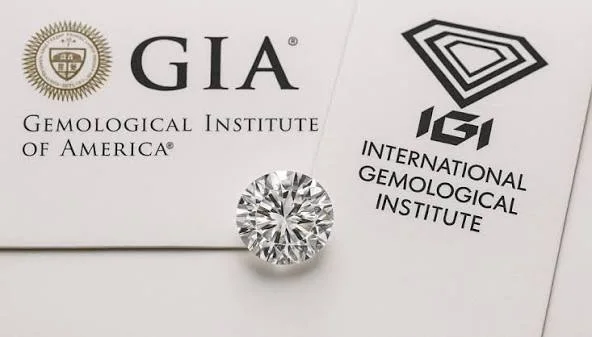
Lab-Grown Diamond Certification Explained: GIA vs IGI
A diamond certificate is the one thing you should never buy a diamond without — natural or lab-grown. It’s an independent, third-party report confirming exactly what you’re getting: the 4Cs, the origin, and for lab-grown stones, the growth method. Here’s what the two major labs actually do differently.
What a certificate actually contains
Every certificate — regardless of lab — states:
Carat weight, measured precisely
Cut grade, from Poor to Excellent
Colour grade, D through Z
Clarity grade, Flawless through Included
Measurements and proportions
A unique report number, often laser-inscribed on the stone itself
For lab-grown diamonds: explicit confirmation of lab-grown origin and growth method (CVD or HPHT)
GIA (Gemological Institute of America)
GIA is the oldest and most widely recognised grading lab in the world, founded in 1931. It created the 4Cs grading system that the entire industry still uses today. GIA is known for being the strictest grader — a GIA-certified stone’s grade is treated as the most conservative, trusted benchmark in the trade. GIA certificates for lab-grown diamonds are marked clearly as “Laboratory-Grown.”
IGI (International Gemological Institute)
IGI is the largest gemological institute by volume and has become the dominant certifier specifically for lab-grown diamonds — the majority of lab-grown stones on the market today carry an IGI report. IGI’s grading is generally considered slightly more generous than GIA’s at the same visual quality, which is worth knowing when comparing two stones with different certificates.
Does it matter which one your diamond has?
For lab-grown diamonds specifically, IGI is the industry standard and there’s nothing wrong with it — it’s a legitimate, widely trusted lab. The practical takeaway isn’t “GIA is better,” it’s this: when comparing two diamonds, only compare grades from the same lab. A G-colour IGI stone and a G-colour GIA stone aren’t guaranteed to look identical — GIA’s G might read closer to an IGI F in practice. If you’re comparing options, ask what each was certified by, not just the grade.